
Ready to
Get Started? Request an Appointment
Get Started? Request an Appointment

If you see a bit of blood on your toothbrush once you’re done using it, don’t ignore it! Instead, check your gums for signs of swelling and call Fantastic Smiles to schedule an appointment. During your visit, Dr. Marable can complete a comprehensive oral exam and determine if you’d benefit from gum disease treatment in Fort Valley, GA. If you are interested in learning more about this restorative service in the meantime, read on!

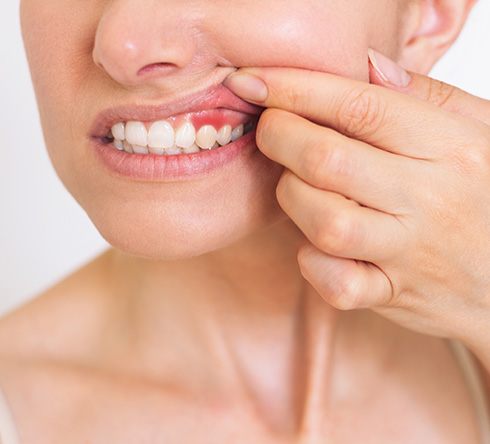
Since roughly 50% of American adults have gum disease, there’s a good chance that you’ve heard of it. But what is it? In short, in its most mild form (gingivitis), only the gum tissue itself is infected. If left alone to progress, however, the infection can eat away at the bone and connective tissue holding your teeth in place, resulting in everything from chronic bad breath to tooth loss. That’s why we recommend reaching out to us when you first notice that something is wrong.
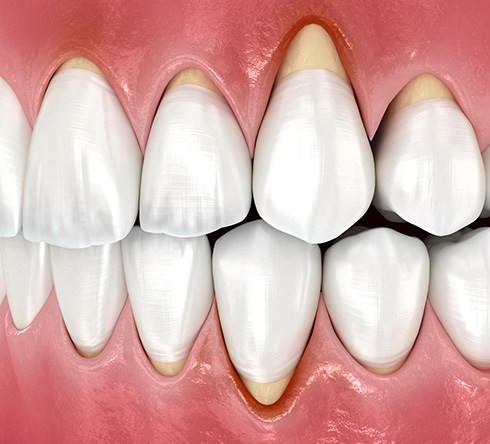
Between your biannual checkups, we recommend keeping an eye out for common warning signs of gum disease, including:

During your visit, we will complete a comprehensive oral exam to determine if you have gum disease and, if you do, how severe your case is. From there, we can discuss your treatment options, including scaling and root planing. You can learn more about each below, but don’t hesitate to give us a call if you have any questions or are ready to schedule an appointment.
As you can probably guess, when treating gum disease, our top priority is to remove the bacteria that is causing the infection in the first place. This is done through scaling, which involves cleaning the teeth, the gums, and the area beneath the gum line. After scaling is complete, it is time for root planing. By smoothing the roots of the teeth, we create a surface that the gums can reattach to more easily. Also, it is more difficult for bacteria to build up on roots that have been smoothed.
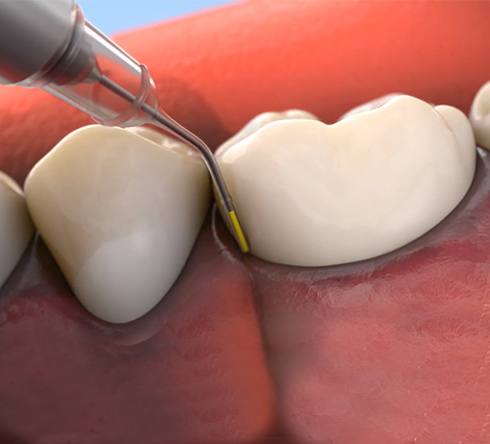
It’s important to keep your mouth as clean as possible after scaling and root planing. The problem is that it’s easy for infectious materials to become trapped in the pockets that form during gum disease. To continuously fight the infection in these areas, we can place an antibiotic called Arestin. It consists of numerous microspheres that slowly release the medication over time, thus fighting bacteria while your mouth is healing.
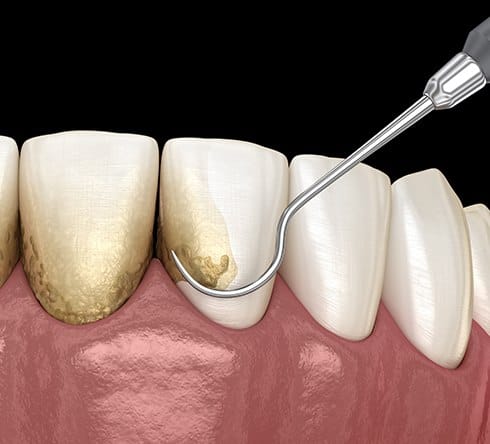
As you can probably guess, when treating gum disease, our top priority is to remove the bacteria that is causing the infection in the first place. This is done through scaling, which involves cleaning the teeth, the gums, and the area beneath the gumline. After scaling is complete, it is time for root planing. By smoothing the roots of the teeth, we create a surface that the gums can reattach to more easily. Also, it is more difficult for bacteria to build up on roots that have been smoothed.

You may need a scaling and root planing if you experience:
Note that not every patient who develops gum disease needs a scaling and root planing. This specific treatment works best in cases where harmful bacteria have traveled below the gumline. After performing an oral exam, Dr. Marable will let you know what kind of gum disease treatment is likely to work best!

First, we’ll “scale” your teeth – which simply means we’ll use special tools to remove stubborn plaque and bacteria from the surface of your teeth, your gumline, and the tissue beneath your gums. Think of it like a “deep cleaning” that’s just more thorough than what you would receive during your routine checkups.
For root planing, we’ll again break out some special tools, but this time, the goal is to “smooth over” the dental roots inside of your gum tissue. As bacteria attacks your gums and causes the tissue to recede, they leave behind empty pockets between the tissue and dental roots. Future bacteria can easily become trapped in these pockets, leading to reinfection. By giving your gums a gentle massage, we encourage the tissue to reattach to the roots, thus closing the pockets and limiting hiding spots for bacteria.

We’ll numb your mouth with a local anesthetic before your scaling and root planing, so try to avoid eating for a few hours after returning home. Otherwise, you could accidentally bite your tongue or inner cheek.
You should still brush and floss after scaling and root planing. We just recommend that you do so carefully, especially near your treated gum tissue! Finally, rinse your mouth with a salt water solution regularly, and take OTC pain relievers as needed to alleviate soreness.